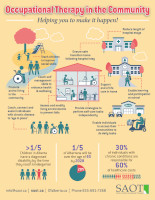
Participate in the Community
We help people be independent, productive and happy.
Everyone belongs to a community; it’s where people live, shop, socialize, play or do business. Sometimes unexpected life changes happen and can affect how people do things in their community. Occupational therapists help people maximize their independence, so they can continue to do the things they enjoy, or help find a new sense of purpose.
Here are some ways an OT can help:
-
Skill development:
Help people learn new or practice old skills to maximize independence. This could include working on fine motor skills to use a phone, social skills on the playground, and cognitive strategies to organize a weekly schedule.
-
Cognitive rehabilitation:
Develop and practice strategies to improve memory, attention, problem-solving, and decision-making skills to manage community life.
-
Adaptive equipment and modifications:
Recommend and train the use of assistive devices, and suggest home and/or community modifications to make activities easier and safer. This could include using power wheelchair or going to a different grocery store with automatic doors instead.
-
Community resources and support:
Connect people to community resources and services that help to support their goals. This might include job training programs, recreational activities, or support groups.
-
Community access:
Find solutions to get around the community safely. Explore the options available such as car modifications, specialized public transportation and private driving services.
-
Education and advocacy:
Help people and their caregivers build knowledge and understanding of health conditions to be better self-managers. OTs advocate at the community and government level for equitable and inclusive changes.

OTs play a crucial role in helping people regain or develop the skills to function within their communities.
Meet Ali
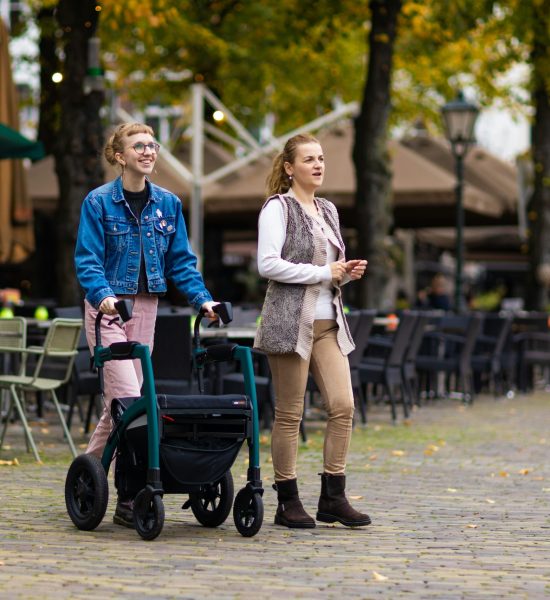
Ali is a 26-year old female living in the city with her partner.
Ali has multiple sclerosis and is experiencing fatigue and difficulty with her balance. She reported being forgetful and found it hard to concentrate working in the office. Ali struggled with her emotions, feeling left out when she compared herself to her friends and peers. As a result, she had a tendency to overdo things.
Ali’s partner is very supportive and together they like to go for coffee downtown or listen to live music. They both take public transportation to get around. Recently, Ali found herself more tired after an outing with little energy for anything else.
Ali learned about an occupational therapy program from the nurse at her doctor’s office and she called the program to refer herself.
Her goals were to keep working part-time as a computer developer and to go on a week long vacation this year that involves a lot of walking and sight seeing.
Outcome for Ali
-
Ali discussed her needs with her employer and now works most days from home. This saved her energy spent traveling to/from work and her concentration has improved.
-
Ali is recognizing her body needs more regularly and focuses on her priority tasks to stay and feel productive.
-
Although Ali was hesitant to use the walker at first, she has found it helpful taking rest breaks on the walker seat. She feels more steady walking and less tired after an outing.
-
Ali and her partner found ways to balance out their vacation with planned recovery time successfully. Ali focused on the quality, not quantity of their vacation.
How an OT helped Ali
-
Reviewed and practiced ways to maximize energy, including taking breaks and prioritizing activities.
-
Helped Ali access a walker to use for long distances and outings to manage her fatigue.
-
Met with Ali and her partner to brainstorm and plan for their vacation, adding rest breaks and flexibility to adjust plans as needed.
-
Provided strategies on setting boundaries in social situations and to recognize personal needs.