Improve Mental Health
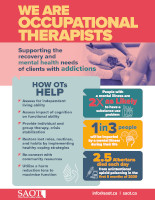
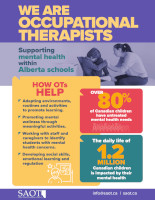
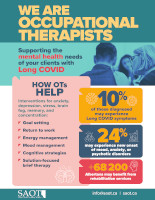
We help people living with mental health challenges engage in meaningful activity and improve well-being
Taking care of one’s mental health helps people cope with stress, make positive choices, and maintain meaningful connections. Occupational therapists understand that mental and emotional health are connected to our physical health.
Here are some ways an OT can help:
-
Assessment:
Explore a person's mental, emotional, and physical state to understand how these factors affect everyday function.
-
Personalized therapy plans:
Develop a therapy plan focused on the person’s strengths, needs, and goals. This can include ways to enhance mental health and coping strategies.
-
Skill development:
Develop skills for everyday activities such as time and stress management. Help create healthy routines to balance self-care, leisure and work.
-
Activity engagement:
Encourage doing activities and hobbies that can improve mood and self-esteem. This may involve creative arts, physical activities and community work.
-
Coping strategies:
Teach coping strategies to manage stress, anxiety, and other emotional issues in everyday life.
-
Environmental modifications:
Recommend changes to home or work spaces to reduce stressors and promote a sense of safety and comfort.
-
Collaboration:
Work together with other healthcare professionals, family members, and your community to provide holistic care.
OTs improve the lives of people living with mental health conditions through learning and practicing self-control skills.
Meet Darlene
Darlene is widowed and in her late 50’s, preparing to retire. She lives in a three-story home with her adult children. She has a stressful job, works long hours and has back pain from the constant standing. She was emotionally and physically exhausted and was easily angered when talking to her children. She has been diagnosed with post-traumatic-stress-disorder, osteoarthritis and depression.
Darlene’s doctor was concerned about the change in her health. She goes to work and goes home. That’s it. She has not connected with her friends for a long time. Six months ago, she took a medical leave and attended a mental health day program for 8-weeks. Darlene reported some functional improvements.
Darlene’s psychiatrist referred her to occupational therapy and has requested an assessment, including a home visit and recommendations.
Darlene’s goals were to manage her emotions and spend more quality time with her children.
How OT assisted Darlene
-
Shared strategies to gain awareness of her emotions and practiced communication skills, energy conservation, and pacing.
-
Education and strategies provided on setting boundaries in work and social situations.
-
Virtual and in-person sessions were provided to reinforce learned skills and to help Darlene prepare for retirement.
-
Facilitated family meetings to support her behavioral changes.
Outcome for Darlene
-
Darlene reported feeling prepared to retire and has a plan in place.
-
Darlene is listening to her body more and takes rest breaks when needed. Her employer is aware and supports this practice.
-
She practices assertive language to make space for her own needs.
-
She is learning to acknowledge and accept her emotions and has strategies on how to manage it.
-
Darlene is now regularly meeting up with her two close friends and prioritizes time to have dinner with her children.