
Recover in Hospital
We can help you recover in the hospital and prepare for a successful discharge home.
At any time you, or someone you care about, may be admitted to a hospital. Occupational therapists play an important role in hospitals as they help you recover from injury or illness, and practice the functional skills to return home safely and smoothly.
Here are some ways an OT can help:
-
Assessment:
Evaluate a patient's abilities, limitations, and needs. This helps to understand how the patient's condition will affect their everyday activities at home.
-
Setting goals:
Work with patients to set realistic and achievable goals related to daily living skills, work tasks, and leisure activities.
-
Rehabilitation strategies:
Design personalized treatment plans aimed to help a person regain or adapt to changed function and prepare for return home.
-
Education:
Educate patients and their families about their conditions, the rehabilitation process, and strategies to maximize independence.
-
Environmental modifications:
Recommend changes to the hospital room and/or the home environment to ensure safety, accessibility and support recovery.
-
Training:
Practice routine activities such as getting in/out of bed and dressing. Practice using adaptive tools or devices to help with tasks.
-
Support for mental health:
Explore the psychological and emotional aspects of recovery and help patients cope with any feelings of frustration or anxiety.
-
Transition planning:
Work with the healthcare team for successful discharge planning. This includes setting up follow-up care and equipment pick up.
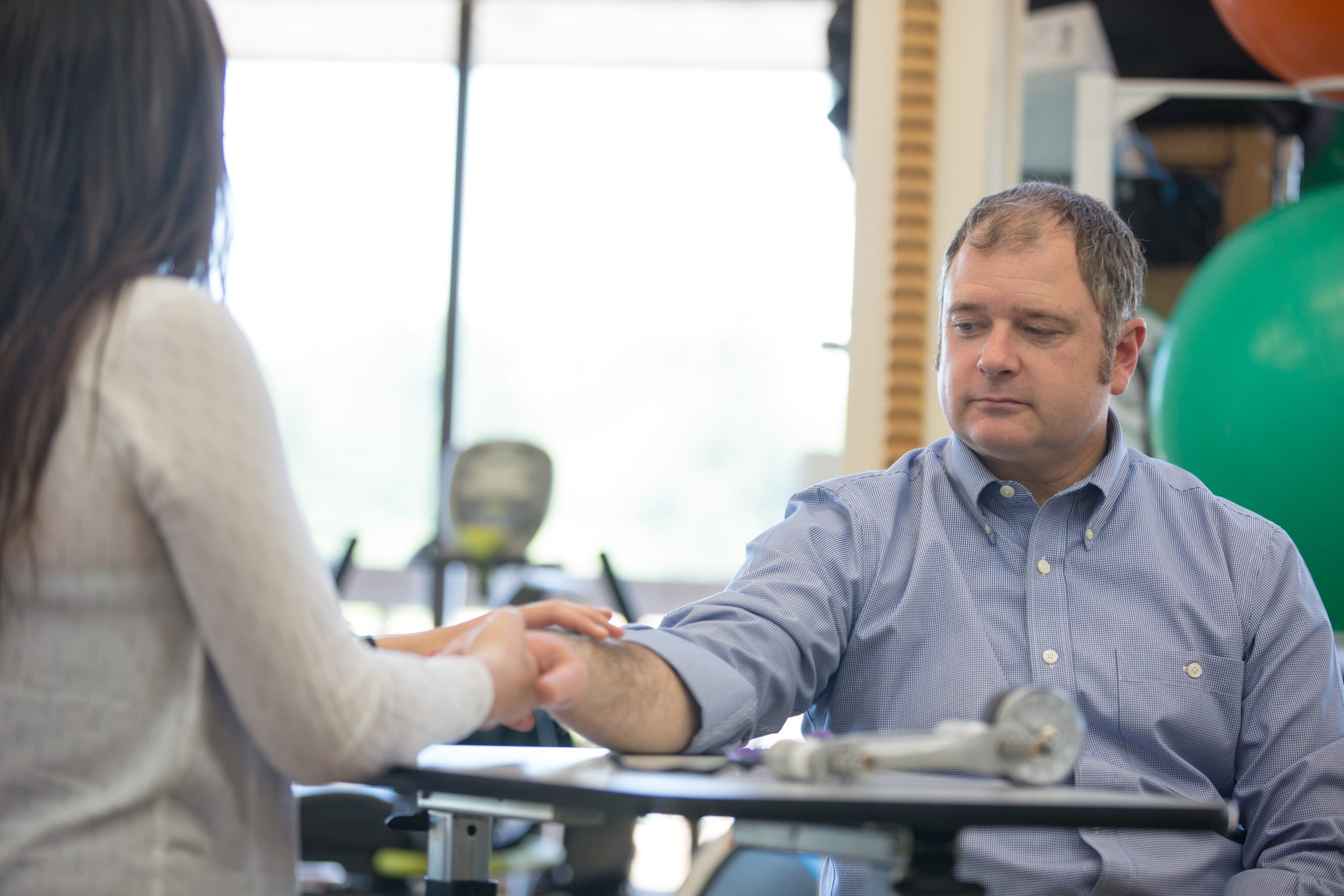
OTs support patients on their physical and emotional recovery.
Meet Zola

Zola is a 75-year-old woman admitted to the hospital after experiencing a fall at home that resulted in a fractured hip.
She has a history of arthritis and mild cognitive impairment, which affects her memory and ability to organize tasks. Zola lives alone in her apartment and has relied on occasional help from her daughter, who visits weekly. Before her fall, she enjoyed cooking, reading, and tending to her small garden on the balcony.
Zola got a hip replacement and was struggled getting in and out of bed, getting dressed and walking to the bathroom on her own. Her surgeon told her that she would be discharged by the end of the week. Zola was feeling anxious about returning home and did not feel ready to manage all her personal care and everyday tasks on her own.
Zola’s surgeon requested an order for occupational therapy to assess and treat, and to help with discharge planning.
Zola’s goal was to be independent with dressing and going to the bathroom on her own before going home.
Outcome for Zola
-
A home care OT came out to assess Zola for permanent equipment. Zola is using the shower bench and raised toilet seat independently.
-
Zola is using tools such as a long-handled reacher, sock aid and a shoe horn to get dressed.
-
Zola is using simple strategies recommended by the home care OT to manage simple meals and tends her garden with support from her daughter.
-
As Zola got stronger, she no longer needed home care services and has her medications bubble packed.
How OT helped Zola
-
Practiced bed and toilet transfers using a walker.
-
Practice getting dressed daily with techniques following hip restrictions.
-
Participated in family conference and worked together with Zola and daughter to create a care plan for a successful return home.
-
Arranged temporary home safety and mobility equipment for daughter to pick-up, recommended home care to help out with bath assist and medication management as needed.