Succeed at School
We help kids learn and be successful at school
Every child is unique and all caregivers want for children to be successful with learning. Occupational therapists help children overcome special needs and challenges, so they can learn effectively and happily participate in school life.
Here are some ways an OT can help:
-
Assessment:
Evaluate student challenges and identify areas for improvement. This is done through classroom observations, interviewing educators, informal screening and standardized testing.
-
Self care:
Train and practice tasks such as feeding, toileting, dressing.
-
Sensory processing:
Help kids deal with bright lights, loud noises or busy school environments, teach educators how to create sensory friendly spaces and recommend strategies for kids who need more sensation (like movement) to learn.
-
Regulation of emotions and activity levels:
Help kids handle big feelings and keep a calm body.
-
Executive functioning skills:
Work on thinking skills to help a child pay attention in class and stay organized.
-
Fine motor skills:
Practice skills such as pencil grasp, writing, typing and using scissors.
-
Gross motor skills and mobility:
Practice skills through play, climbing on the playground and getting around school (balance, coordination, strength).
-
Visual perceptual skills:
Teach skills to identify letters, match shapes and navigate spaces to prepare for reading, writing, problem solving, motor and social skill development.
-
Social and play skills:
Help kids recognize social cues to participate and play with peers successfully. Encourage play and creativity.
-
Follow classroom routines and expectations:
Share strategies with educators such as using visual schedules, sensory tools and ways to manage emotions.
School-based OTs work with educators on how to adapt tasks and environments to meet the unique needs of their students.
Meet Fatima
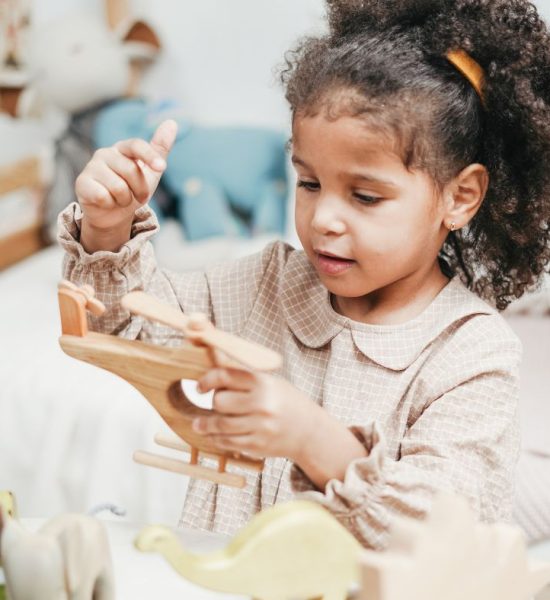
Fatima is a playful 4 year old attending preschool. She loves trains, dinosaurs and building with blocks.
Fatima was nervous when she started preschool in the Fall. She wanted to play with all the new toys, but the loud sounds hurt her ears! There were other kids yelling and running all around her. Fatima was having difficulties following her teacher in class. Fatima kept to the corner of the classroom covering her ears.
Fatima wanted to play with the other kids, but wasn’t sure how to join in their games. They seemed to be having so much fun but it was too loud and busy for her. Fatima hasn’t made any friends at school.
Fatima no longer wanted to go to school. She refused to get out of the car in the morning. Fatima would cry and asked to go home where it is calm and quiet.
Her teacher reached out to the school OT to work with Fatima.
Her parents’ goal was for Fatima to feel safe in preschool.
Outcome for Fatima
-
Fatima has learned strategies to calm herself when school gets too loud or overwhelming. She knows to use her ear covers or go to the quiet corner to feel safe.
-
Fatima's teacher now knows what to look out for to minimize distraction and ways to help Fatima feel safe and participate in class.
-
With practice and encouragement, Fatima has learned to play and share toys in a small group.
How an OT helped Fatima
-
Provided noise-cancelling ear covers for Fatima to wear as needed.
-
Helped Fatima's teacher set up a quiet corner retreat in the classroom with tools to help her calm her body.
-
Taught and practiced social-skills in small groups.
-
Worked with school staff to create a routine for Fatima to help ease her morning transition to school, meet her need for quiet and calm and allow for full participation at school.